
What Improves in Your Organization Through Our Workshops

-
Reduced misunderstandings in teams
Fewer communication breakdowns in meetings
Improved clarity in internal communication
Higher participation in meetings (especially cross-cultural)
-
Faster onboarding of international employees
Higher retention of new hires
Smoother integration into team culture
Shorter time to “full productivity”
-
Improved cross-team collaboration
More efficient decision-making
Reduced conflict or friction in teams
Better feedback exchange
-
Improve self-awareness and awareness of others in professional interactions
Strengthen communication by understanding emotions behind behavior
Develop empathy to navigate cultural and interpersonal differences
Enhance leadership and collaboration through emotionally intelligent responses
-
Improve inclusion of diverse employees in everyday collaboration
Reduce friction caused by cultural assumptions and unconscious bias
Strengthen team cohesion across different backgrounds and perspectives
Support a more open, respectful, and psychologically safe workplace
-
Support leaders in managing multicultural and diverse teams
Improve decision-making in complex, cross-cultural environments
Strengthen communication between leadership and teams
Increase emotional intelligence in leadership practices

Better collaboration across teams

In today’s global workplaces, differences in language, communication styles, and expectations can easily lead to misunderstandings and inefficiencies.
Through practical, experience-based training, such as interpreting silence, understanding unspoken expectations, and recognizing different leadership styles, I help organizations understand common business challenges arising from cultural differences and apply clear strategiesto strengthen communication, build trust, and improve collaboration across teams.
Beyond Cultural Awareness

Culture can be understood as a set of shared values, beliefs, and assumptions that distinguish one group from another. These cultural patterns influence how people think, interpret their experiences, and make sense of the world around them, ultimately shaping the institutions and practices of a society.
This does not mean that everyone within a society thinks in the same way.
However, national-level comparisons are still useful because shared social influences create broad patterns. These should be understood as general tendencies, not fixed truths, and only make sense when compared across cultures.
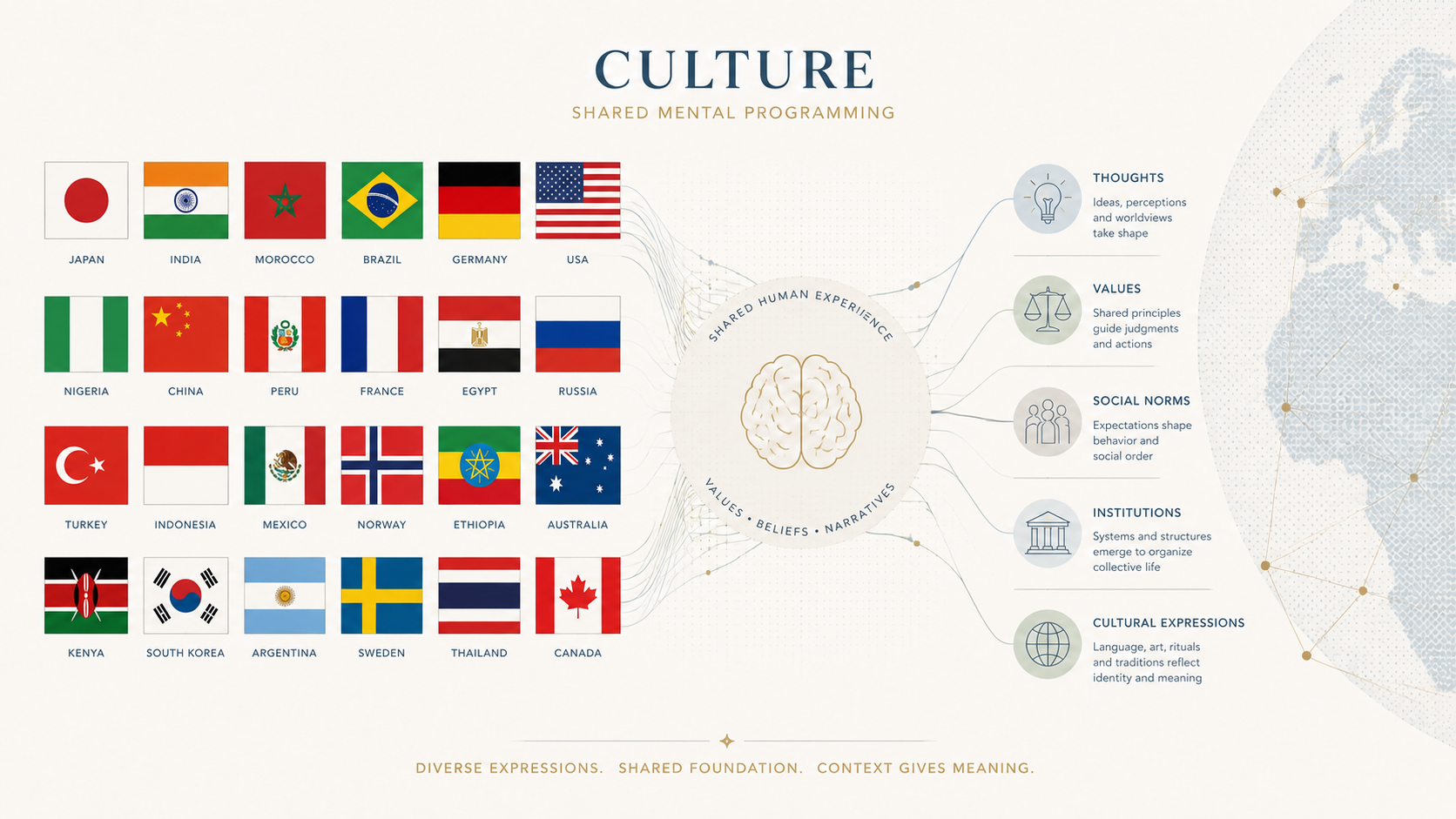
Culture is often described as shared mental patterns that shape how people think, interpret, and behave.
These patterns influence meaning-making in communication and help explain why the same message can be understood differently across cultures.
This perspective is informed by interdisciplinary research in cultural and organisational studies, including Hofstede, Goleman, Gadamer, Geertz, and Meyer, among others.
It highlights that meaning is not universal, but shaped by cultural and social context.
Behind every person,
every attitude,
every tone of voice,
and every reaction
lie cultural patterns
that you may not yet
be aware of.